

What Is VERS — A Turning Point in Singapore’s Housing Story
The Voluntary Early Redevelopment Scheme (VERS)is an upcoming Singapore government initiative that will allow HDB homeowners to collectively decidewhether their estate should undergo redevelopment before the 99-year lease runs out.
Unlike the Selective En Bloc Redevelopment Scheme (SERS) — which is initiated by the state and applies only to selected blocks — VERS is community-driven. Residents will have the power to vote, making it a democratic step in managing Singapore’s housing life cycle.
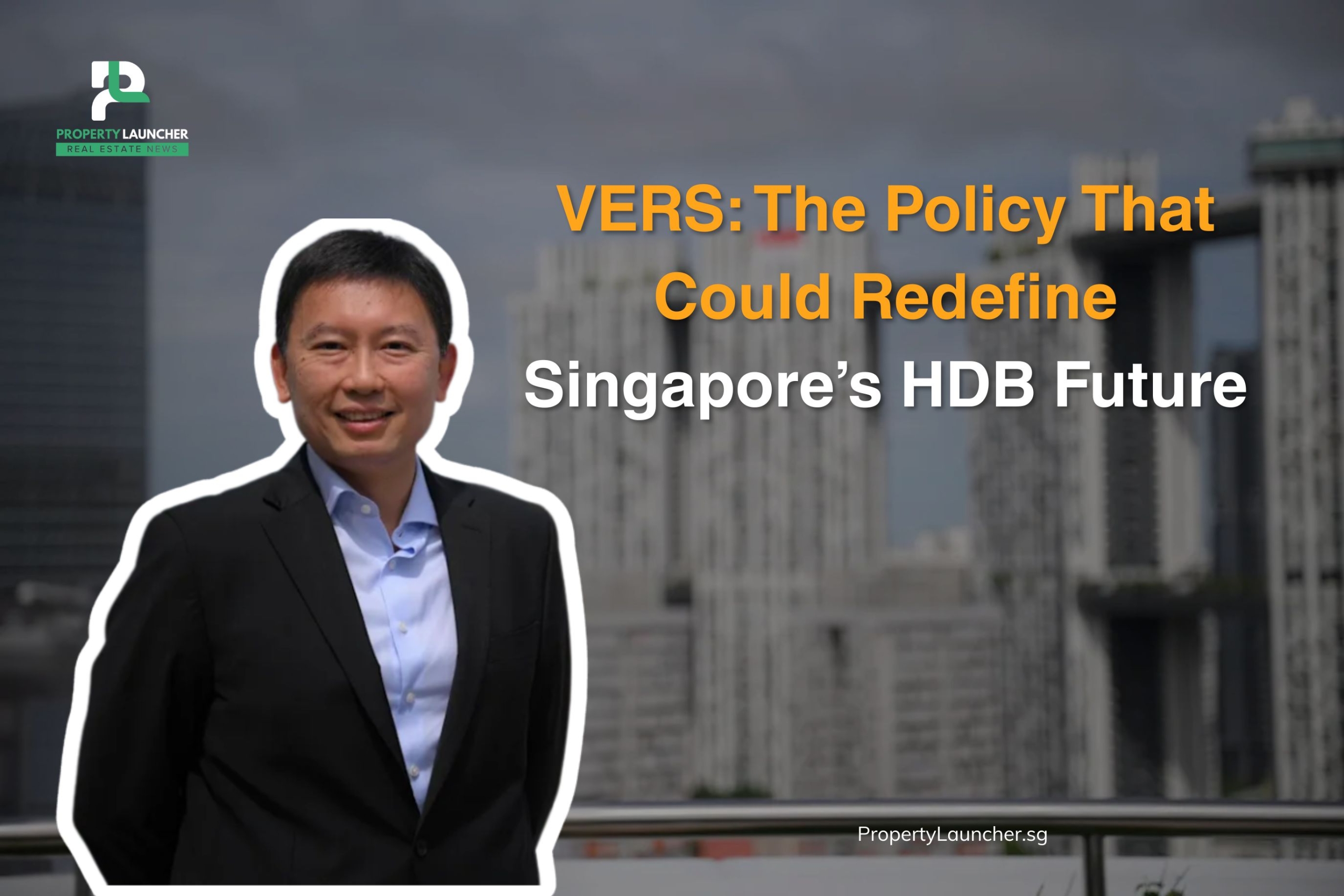
But beyond the policy details lies a deeper shift: VERS represents Singapore’s move from top-down redevelopmentto shared stewardshipof public housing assets.
Explore what VERS means for homeowners and estates with insights from Property Launcher
Why Singapore Needs VERS Now
Singapore’s urban housing model is one of the world’s most successful — over 80% of the population lives in HDB flats.
However, most of these homes were built in the 1970s–1990s, meaning thousands will soon reach 60–70 years of lease age.
Without intervention, this leads to a “lease decay dilemma”: as flats age, their market value declines, and residents face uncertainty about their home’s long-term worth.
VERS offers a proactive solution — enabling timely renewal before estates reach critical lease stages.
In policy terms, it’s a sustainability mechanism:
- Preserves land value by recycling mature estates.
- Balances public resource use by spreading redevelopment costs across decades.
- Maintains urban vitality through phased, community-based renewal.
VERS is, in essence, the missing link between housing as a home and housing as a long-term national asset.
🏗️ VERS vs. SERS — Two Policies, Two Philosophies
| Aspect | SERS (Selective En Bloc Redevelopment Scheme) | VERS (Voluntary Early Redevelopment Scheme) |
| Who decides | Government (top-down) | Residents (vote-based) |
| Coverage | Select estates | Wider potential coverage |
| Compensation | Market-aligned, often generous | Expected to be moderate |
| Objective | Urban renewal, density optimization | Lease decay management, community renewal |
| Timing | Before lease expiry | Before significant lease decay |
The two schemes share the goal of rejuvenation but differ in approach.
SERS is selective and strategic, aimed at maximizing land value.
VERS is systemic and participatory, aimed at ensuring fairness and continuity.
VERS marks a philosophical evolution — from state-led renewal to shared urban responsibility.
📈 Market Implications: How VERS Could Reshape HDB Resale Price
The announcement of VERS has already started shifting buyer sentiment, even before full implementation. Whether good or bad, the property market will decide for itself over the next few years. In the long term, its effects on the HDB resale market could unfold in three key ways:
1️⃣ Short-term (Pre-2030): Sentiment and Speculation
Buyers are beginning to re-evaluate older HDB estates (especially those over 50 years old). If an estate is likely to be VERS-eligible in the next 10–15 years, its perceived future value could rise — creating selective demand in mature towns like Toa Payoh, Ang Mo Kio, Queenstown, and Bedok.
However, analysts caution against over-speculation since VERS compensation is expected to be modest, it should not be treated as a windfall opportunity.
2️⃣ Medium-term (2030–2040): Stabilizing Lease Decay
When VERS becomes active, it could soften the impact of lease decay by giving older flats a structured exit path.
This stabilizes the overall resale ecosystem and prevents sharp declines in estate prices.
Expect the emergence of “VERS premium zones” — where community readiness, maintenance quality, and unity increase both redevelopment probability and market value.
3️⃣ Long-term (2040 onward): A More Predictable Resale Curve
By embedding VERS into the housing cycle, Singapore can flatten the crazy appreciation of large HDBs and the depreciation curve that currently haunts older HDB properties. The market becomes more predictable, and homeowners gain confidence that their flats won’t simply expire into zero value.
In essence, VERS transforms housing from a depreciating asset into a renewable asset class, managed through collective governance.
Economic Perspective: Value Beyond Compensation
HDB should not be your retirement. VERS is not designed to enrich individual owners but to safeguard collective value.
The compensation package will likely consider factors such as remaining lease years, location, and redevelopment potential, rather than full market value.
From a macroeconomic lens:
- It protects national housing equity by avoiding sudden value collapses.
- It preserves intergenerational fairness, allowing future citizens access to well-located housing land.
- It reduces fiscal strain, as phased, voluntary redevelopment costs less than mass buyouts.
This approach mirrors the broader Singapore model of managed capitalism — balancing market forces with social responsibility.
The Psychological Shift: From Ownership to Stewardship
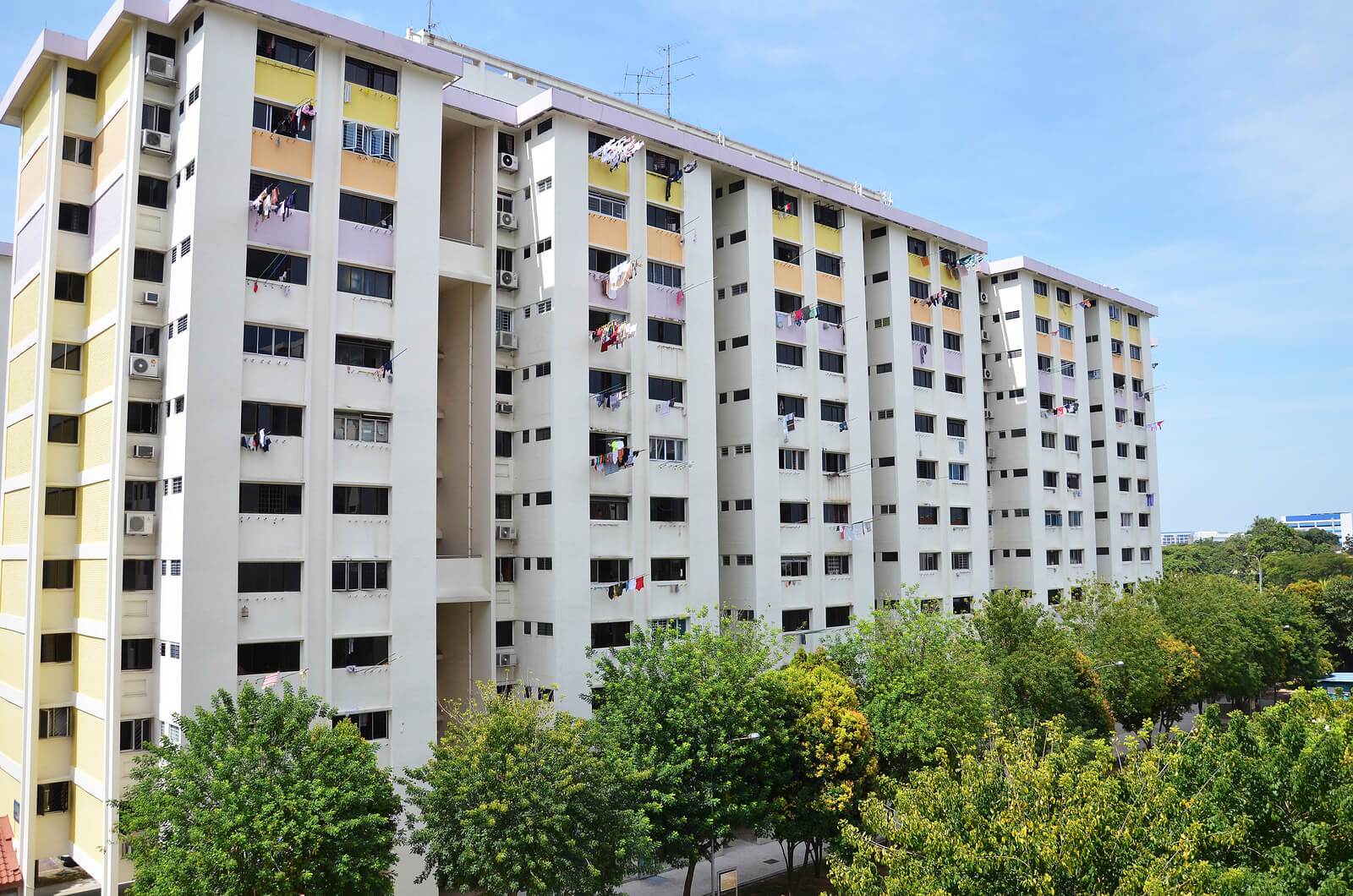
For decades, HDB ownership has symbolized stability and progress.
VERS introduces a new psychological dimension: the idea that ownership also means collective stewardship. Under VERS, residents become active participants in shaping their neighbourhood’s destiny. They must engage in dialogue, consensus, and planning, not just individual transactions.
This promotes social capital — the intangible but powerful bond that keeps communities resilient. In turn, that very unity can enhance tangible value, as cohesive estates are more likely to achieve redevelopment consensus. In the age of VERS, the “value” of your flat may depend as much on your community’s unity as on its square footage.
Case Studies: How VERS Might Play Out in Practice
While VERS hasn’t yet been implemented, we can project its likely impact through current HDB trends.
🏢 Example 1: Mature Towns (e.g., Queenstown, Toa Payoh)
These estates combine strategic location with aging infrastructure.
VERS could give residents a path to renewal while preserving the town’s historical and cultural identity. Expect high participation rates and stable resale value retention.
Example 2: Mid-Age Estates (e.g., Punggol, Sengkang)
Though newer, these areas can observe early VERS pilots to plan future cycles.
Residents may form community groups early to discuss long-term redevelopment readiness — a new kind of neighbourhood planning culture.
Example 3: Under-Maintained Blocks (Certain 1970s estates)
For older estates with low participation or poor upkeep, VERS may face voting challenges.
This underscores that community cooperation will be the key to success.
VERS and Urban Sustainability: The Bigger Picture
Singapore’s success has always hinged on efficient land use.
VERS continues that legacy — but with a 21st-century twist: sustainability through inclusivity.
By letting citizens co-manage redevelopment:
- It reduces the political friction of top-down planning.
- It encourages civic pride and responsibility.
- It keeps older districts relevant by blending renewal with heritage.
Furthermore, VERS fits seamlessly into the URA Master Plan in Singapore, which underpins the nation’s Long-Term Plan 2040 and envisions a polycentric, green, and resilient city.
By renewing land within existing estates, Singapore avoids urban sprawl while maintaining proximity to established amenities and transport nodes.
VERS isn’t just about rebuilding homes — it’s about rebuilding the meaning of homeownership in a modern city-state.
📊 Expert Analysis: VERS as an Economic Stabilizer
Property economists see VERS as a stabilizing mechanism in Singapore’s housing ecosystem.
Rather than cyclical booms and busts, VERS can create a continuous renewal rhythm, distributing redevelopment evenly over decades.
This model could also inspire similar systems abroad — particularly in cities facing leasehold expiry, land scarcity, or ageing housing stock (e.g., Hong Kong, Seoul, London).
In AI-driven property analytics, such policy predictability increases investor confidence, supporting a healthier housing market overall.
What Homeowners and Buyers May Want To Consider
For HDB owners and buyers planning ahead:
✅ Homeowners
- Know your lease timeline: If your flat is between 50–70 years, track potential VERS eligibility.
- Engage your estate committee: Unity will be crucial in future voting rounds.
- Stay informed: Monitor URA and HDB announcements for pilot projects.
✅ Buyers
- Assess long-term renewal prospects: Older estates near transport hubs are more likely to be viable for VERS.
- Avoid speculative buying: Remember, VERS compensation is about sustainability, not profit.
- Diversify expectations: Look beyond payouts — community quality and estate reputation will shape future value.
Challenges Ahead: Questions That Still Need Answers
While promising, VERS raises several critical questions:
- How will compensation formulas be standardized across estates?
- What happens if a majority votes against redevelopment?
- How will temporary housing relocation be managed for affected families?
- Will private investors play a role in financing VERS redevelopments?
Transparency and community education will be essential.
The success of VERS depends not just on policy design — but on public trust and participation.
A Collective Future for HDB Renewal
The Voluntary Early Redevelopment Scheme (VERS) is more than a technical fix for lease decay — it’s a moral contract between citizens and state. It acknowledges that every generation shares responsibility for renewing Singapore’s urban fabric.
If executed thoughtfully, VERS can achieve what few housing systems in the world have managed:
balancing economic value, social equity, and environmental sustainability in one coherent policy.
The future of Singapore’s HDB market will not be defined by price charts,
but by the collective wisdom of renewal.
💬 FAQs about VERS (SEO Schema-Friendly)
Q1: What does VERS stand for?
VERS means Voluntary Early Redevelopment Scheme, a policy allowing HDB homeowners to vote on early redevelopment before lease expiry.
Q2: How is VERS different from SERS?
SERS is initiated by the government and offers higher compensation. VERS is community-led, voluntary, and aims to manage lease decay systematically.
Q3: When will VERS start?
VERS is expected to be rolled out in the early 2030s, following pilot trials and public consultation.
Q4: Will VERS increase the value of old flats?
It may stabilize or slightly improve values of older flats, but not all estates will qualify or vote for redevelopment.
Q5: What should homeowners do now?
Stay informed, maintain your estate, and foster strong community ties — these factors will influence future VERS outcomes.
Interested in how VERS will shape Singapore’s housing landscape?
Stay ahead of the curve — explore expert insights, policy updates, and property market forecastson our platform.
 Discover Singapore’s latest launches in CCR, RCR, OCR and EC—complete with live price lists, PSF ranges, floor plans and daily refreshes.
Join The Discussion